

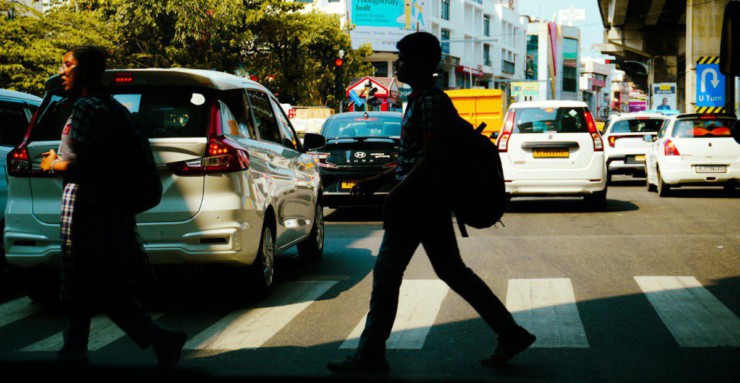
Technology and infrastructure are advancing at breakneck speed, yet road crashes continue to claim lives daily. Globally, 1.2 million people die each year in road accidents, costing nations nearly 3% of their GDP. The truth is sobering: safer cars and better highways cannot compensate for unsafe human behavior. Road safety begins not with machines, but with choices.
🌍 1. The Alarming Reality of Road Safety Worldwide
Road crashes are a global public-health emergency—quietly claiming lives at a scale comparable to major disasters, with children and young adults among the most affected.
Key Points :
- ~1.19 million people die every year due to road traffic crashes worldwide.
- That’s over 3,200 deaths every day and more than 2 deaths every minute—roughly 1 death every ~26.5 seconds. .
- Road traffic injuries are the leading cause of death for children and young adults aged 5–29 years worldwide.
- Males are typically about 3× more likely to be killed in road crashes than females.
- Speed is one of the main risk factors: as average speed increases, both the likelihood of a crash and the severity of outcomes rise sharply.
🚶 2. The Plight of Vulnerable Road Users
Not everyone is protected by airbags or steel frames. Across the world, pedestrians, cyclists, and motorcyclists remain the most exposed—and the most at risk—on our roads.
Key Points:
- Over half of global road deaths involve vulnerable road users, including:
- Pedestrians (~23%)
- Motorcyclists / two-wheelers (~21%)
- Cyclists (~6%)
- Car occupants account for ~30% of fatalities, showing that risk is shared—but protection is not equal.
- In many low- and middle-income countries, pedestrians and two-wheeler riders face disproportionately higher risks, while high-income regions see a higher share of car occupant deaths.
🧠 3. The Root Cause: Human Behavior Over Infrastructure
It’s tempting to blame bad roads or faulty vehicles, but the real danger lies in driver psychology and habits.
Key Points:
- Safety is learned, not innate—yet rarely taught early in life.
- Infrastructure has advanced, but driver skills lag behind.
- An unskilled driver is dangerous even in a modern car.
- A skilled driver can navigate safely even on poor roads.
🛡️ 4. Actionable Steps: Protecting Yourself and Others
Road safety is a shared responsibility. Whether walking or driving, small habits save lives.
Key Points:
- For Pedestrians and cyclists: Obey signals, use crosswalks, avoid distractions, wear reflective clothing.
- For Drivers: Slow down in urban zones, yield at crosswalks, eliminate distractions, and stay patient.
- Awareness of school zones, intersections, and crowded streets is critical.
🍃 Final Takeaway Better roads and smarter cars cannot erase the human factor. True safety begins with behavior—choosing patience over speed, awareness over distraction, and skill over recklessness. Every commute is a choice between risk and responsibility. The most powerful safety feature on any road is not technology—it’s you.